Start with the exact ingredient
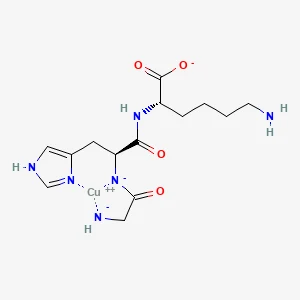
GHK-Cu refers to a copper complex involving the tripeptide glycyl-L-histidyl-L-lysine. That identity does not by itself tell you the amount, stability or performance of a cosmetic containing it. Read the complete formulation and the intended route before comparing claims.
What a clinical study can show
One clinical study in laser-resurfaced skin did not find a significant reduction in post-treatment redness with the tested copper-tripeptide products. Its setting and endpoints are specific. Neither a positive laboratory mechanism nor one clinical result establishes how every everyday skincare product will perform.
Routes cannot be substituted
A topical cosmetic and an injectable preparation have different exposure and safety questions. FDA lists specific concerns about compounded injectable GHK-Cu, including immunogenicity risks associated with aggregation and impurities. A cosmetic discussion is not a basis for injection advice or a recommendation to buy a research vial.
Compare evidence cautiously
Ask whether a cited paper evaluated the finished product, whether its participants and outcomes match the claim, and whether results have been independently reproduced. PeptideC does not rate medical effectiveness or suggest a personal copper-peptide regimen.
Sources & references
- Effects of topical copper tripeptide complex on CO2 laser-resurfaced skin — clinical study ↗
- FDA: Bulk drug substances that may present significant safety risks ↗
- FDA: Cosmetic Ingredients ↗
A chemical record identifies a reference, a study reports a defined investigation, and a product label concerns a specific medicine. A supplier catalogue is not clinical evidence.
General education, not personal medical advice. Ask an appropriately qualified professional about a medicine, symptom or treatment question.